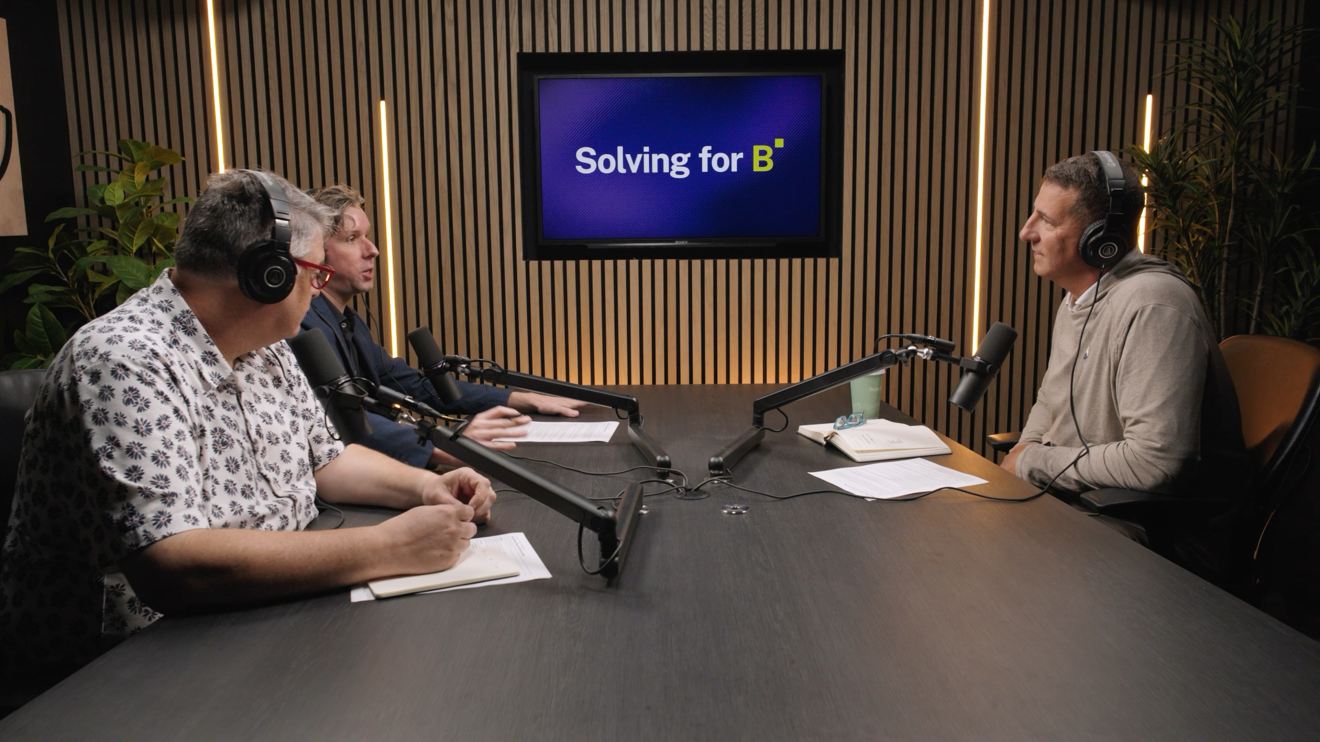
On this episode of Solving for B, BrandExtract CEO Bo Bothe sits down with Director of Digital Experience Donovan Buck and Marketing Automation Manager Taylor Dodds to talk about automation, CRMs and the messy reality behind them. Most failed implementations aren’t technology problems; they’re people and process problems. The team shares why private spreadsheets are a warning sign, what AI is changing about data and decision-making, why the out-of-box experience disappoints, and where leaders should start before choosing a platform.
Table of Contents
- Why Do CRM Implementations Turn Into a Mess?
- What Can Automation and AI Make Possible?
- Why Does the Out-of-Box Experience Fall Short?
- Where Should Leaders Start?
Episode Transcript
*This transcript has been edited for clarity and readability.
Q: Why Do CRM Implementations Turn Into a Mess?
Bo: It’s getting easier to measure whether something we did actually led to someone buying and generating profitable revenue. When we start working with clients, whether they’re in HubSpot or something else, it’s usually a mess. That’s not really a technology problem. It’s a people problem. Teams say the CRM doesn’t work, but everyone is keeping their own spreadsheets, and leadership is frustrated with the data they’re not getting. And when you try to scale a mess, it just becomes a bigger mess.
Taylor: The number one thing is disparate sales and marketing spreadsheets, with everyone keeping their own contacts. At this point I just walk in and say, “Give me all your spreadsheets, and I’ll unify them.” You’ll also find duplicate properties and fill rates of 1% to 2%. Then leadership says the system doesn’t work, because everyone is doing their own thing. You have to align on a process.
Donovan: The fear is data integrity. A CRM is only as good as what you put in. The first task on a project like this is usually cleanup: getting the data together, filling in the fields that should be filled in and removing records that shouldn’t be there. That’s the heaviest lift.
Bo: Why is the private spreadsheet the tell?
Taylor: It tells me you don’t trust the data integrity of the system, or you’re not bought into the process. Maybe there’s no agreement on what a qualified lead looks like or when an opportunity is dead. Sometimes that’s fair; sometimes the data really is a mess. But getting to alignment starts with a discussion that defines what makes a good lead and how you’ll maintain your data.
Key Takeaways:
- Most CRM failures are people and process problems, not technology problems
- Private spreadsheets signal a lack of trust in the data or the process
- Data cleanup is usually the first and heaviest lift
- Alignment starts with shared definitions, like what counts as a qualified lead
Q: What Can Automation and AI Make Possible?
Taylor: Automation is a big time saver. Lead nurturing campaigns that move someone from a raw lead to sales-ready are the fun part. But as a big data nerd, I also love automating manual data management, like moving information from one system to another. It frees marketing, sales and service teams to spend more time on the work they want to do.
Donovan: For leadership, it’s about insight. When they invest money in a campaign, they want to know if it’s working.
Bo: There’s an employee side, too. People fear Big Brother is watching, but a CRM gives you proof that what you’re doing works. That can mean more budget for the work you love or getting paid for your performance.
Taylor: Marketing wants to show it drove a lead and revenue. Sales wants a lead that’s actually warm. Service needs context on what sales said and what marketing promised. Get them all in one ecosystem with one contact or company record and a timeline of everything, and everyone’s job gets easier, or at least more informed.
Donovan: You can go beyond sales and marketing. Most CRMs have an API you can use in ways unique to your organization. We use HubSpot forecasts based on leads in the system to know whether we need to hire someone in 12 weeks.
Taylor: AI is saving a huge amount of time. I used to combine everyone’s lists and manually correct inconsistencies row by row. Those days are gone. CRMs are also building AI in, like HubSpot’s Breeze. It can walk less-comfortable users through the system, flag corrupted data, and tell you when a workflow fails and how to fix it. With our Claude connector for HubSpot, I can run three chats doing three different actions at once.
Donovan: AI also helps you analyze the information. Most providers now offer an MCP, essentially an API designed for AI, so you can ask questions of your data without building a report. You can ask, “What happens to my workload if I close these two deals?”
Taylor: That removes the bottleneck. You’re no longer waiting on one CRM admin to pull numbers for a leadership report. Managers can ask those questions themselves.
Key Takeaways:
- Automation removes manual data entry so teams can focus on higher-value work
- A single source of truth connects marketing, sales and service around the same customer record
- CRM data can inform decisions beyond marketing, from campaign budgets to hiring forecasts
- Built-in AI and AI connectors speed up cleanup, flag errors and let leaders query data directly
Q: Why Does the Out-of-Box Experience Fall Short?
Bo: We hear that HubSpot is expensive, but compared with the size of these companies, it isn’t. What is it about the out-of-box experience that trips people up?
Taylor: In a demo, you see clean, sterilized data sets, and it all looks simple. Then you get in and realize your business is nothing like the one in the demo. We’ve onboarded more than 50 clients, and every one uses different properties and has a different definition of what’s “qualified.” That’s where consulting comes in. Nobody goes to school to learn CRMs. The software does what it does, but you need to customize it for your business.
Donovan: The CRM is a framework, not a process or a team. Think of SharePoint. Plenty of people have built on it, but very few say they love it, because it’s just a framework. You can implement any CRM poorly. The quality doesn’t come from the software you choose; it comes from the processes you build around it.
Bo: When people take a cookie-cutter approach, they think they’re buying a CRM to solve a problem, but they’re really just funding the problem. We’re a branding firm. Even when 52 companies sell the same product, each delivers it, sells it and manages it a little differently.
Taylor: Every company has its own unique brand values, and it’s the same with how they treat their data and their sales and marketing process. Two big competitors will still have different people, processes and definitions. That’s what people deal with 80% to 90% of their day.
Donovan: The markets vary, too. One client told us fewer than a thousand people on earth buy their product, and he knows them all. Others are trying to reach millions of consumers. Those are very different propositions.
Taylor: People want to jump to the end because they’ve invested in the system and probably spent months deciding. Then I come in and say, “Hold up, let’s talk about your data definitions and processes.” You also need someone to step up and own the data and the process. The least fun part, and the most crucial, is cleaning up and filling in that master spreadsheet. Bad data leads to brand problems, like emailing the wrong person at the wrong time with the wrong message.
Donovan: How you introduce it matters. Instead of “Look at all these new things we can do,” say “We bought this to solve this problem.” You get more buy-in that way. And you need a data hygiene process to keep the data clean going forward.
Key Takeaways:
- Demos show clean data; real businesses have custom data sets and their own definitions
- A CRM is a framework, and its value comes from the processes built around it
- Every company is unique in how it manages data and sells, so the system should reflect that
- Implementations need an internal owner, a thorough data cleanup and ongoing data hygiene
- Frame the rollout around the problems it solves for the team
Q: Where Should Leaders Start?
Bo: If you were advising a CEO before they even pick a system, what’s the first thing you’d tell them?
Taylor: What problem are you trying to solve, and how does it align with your business and brand goals?
Donovan: Then take inventory of the ecosystem you already have. What ERP, inventory or support systems do you need to integrate with? That can steer you toward a platform. And do you plan to switch any of them out in a couple of years?
Bo: This sounds complicated, but it’s really a two-hour conversation to get everything on the table. There’s work behind it, but it isn’t a six-month consulting project.
Taylor: Once you know your problems and choose the software, a CRM setup typically takes about three months. It’s useful in the first month, more useful in the second, and by the third, all systems are firing. Custom integrations can extend that.
Bo: I tell clients that in six months, we’ll start to get actionable data. In nine months, we’ll see what can and can’t be turned off.
Taylor: Every team needs to be prepared to change. We’ve talked to people who spend every Monday morning downloading a list, formatting it in Excel and sending it out. When we tell them they won’t have to anymore, they’re shocked. Humans don’t like change, but you’ll get a better process, more of your day back and more time for work only you can do. Let the robots do what the robots can do.
Donovan: As a leader, get the people problem in hand before you start. You need enough alignment, not perfect alignment. One salesperson will think it makes their job easier, another will want it to highlight their wins, and others will be afraid. You have to address each concern differently.
Taylor: Our most successful implementations had all the stakeholders in the room early. It goes wrong when one department leads the charge without the others feeling part of the process. Some people won’t buy in until they’ve used the system for three to six months and seen it work.
Bo: This was meant to be a plumbing episode, but it comes back to this: your brand is a promise. The systems your information travels on are critical to delivering that promise, along with the people who have to buy in to make it work. It’s less a technology problem than a question of how the system fits the way you deliver for your customer.
Key Takeaways:
- Start by defining the problem you’re solving and how it ties to business and brand goals
- Inventory your existing systems before choosing a platform
- A focused CRM implementation can be up and running in about three months
- Aim for enough alignment, and involve every stakeholder group early
- Systems and data are part of how your brand delivers on its promise
Get More Marketing Automation Insights
Want to learn more about getting your CRM and automation working for your business? Explore our insights library for more conversations on brand, marketing and growth, and subscribe to our newsletter to get the latest episodes of Solving for B delivered to your inbox.